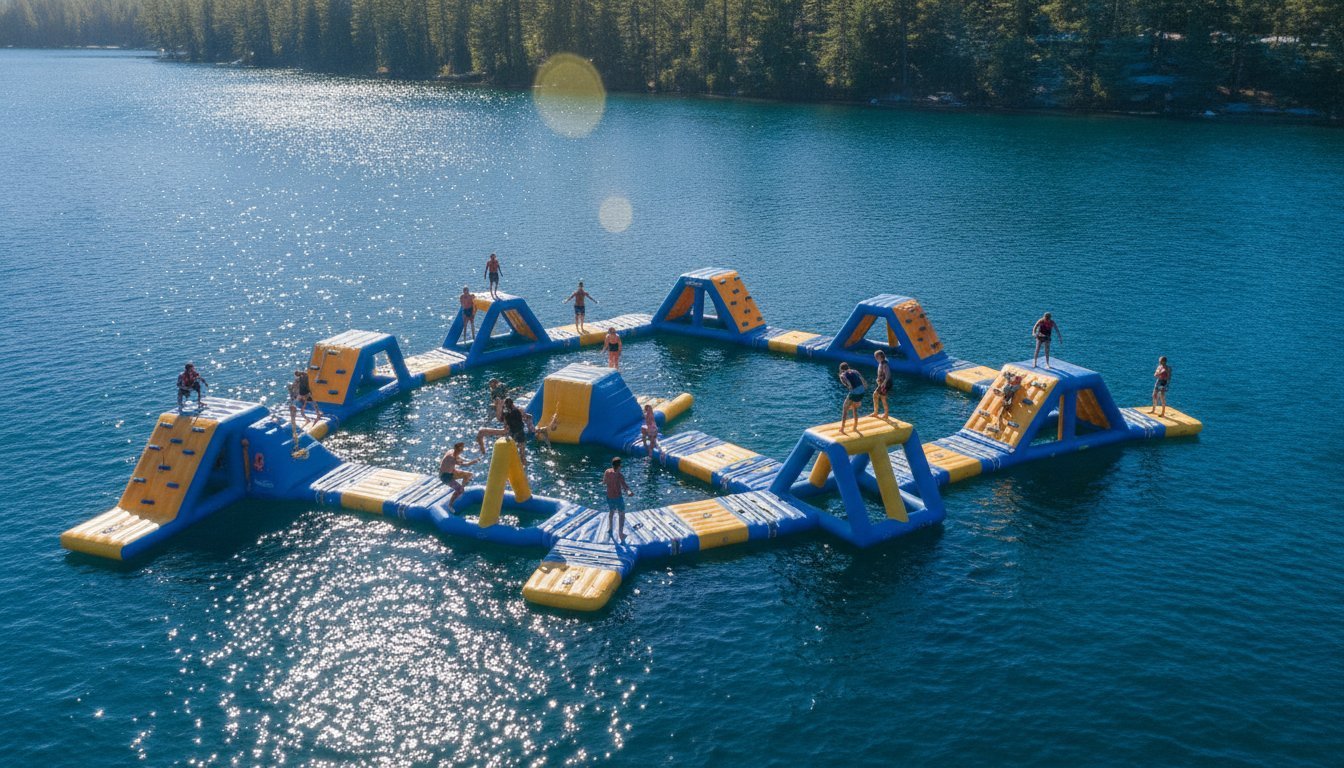
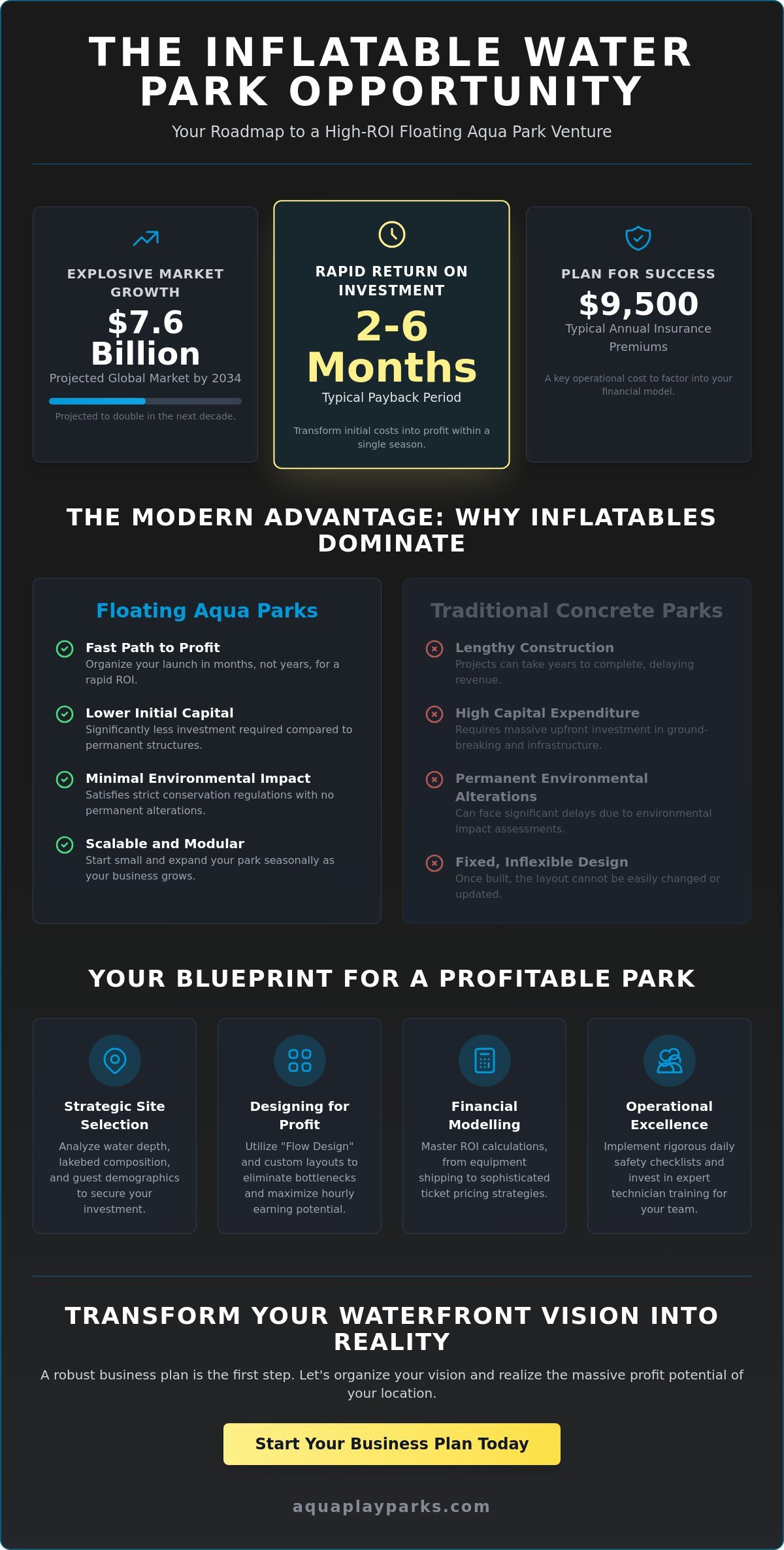
Did you know that the global inflatable waterpark market is projected to double to $7.6 billion by 2034, with most savvy investors recovering their initial costs in as little as two to six months? It’s an explosive opportunity. You likely recognize the massive potential but feel the weight of high initial capital expenditure and insurance premiums that can reach $9,500 annually. You need more than just a collection of floats; you need a bulletproof inflatable water park business plan that transforms your anxiety into professional operational confidence. We understand that navigating safety standards like ASTM F2374-22 while trying to maximize seasonal revenue can feel overwhelming.
We’re going to strip away that uncertainty. This guide promises to help you master the strategy, custom design, and financial modelling required to launch a high-ROI commercial floating aqua park. You’ll get a clear roadmap from the first sketch to the grand opening, including a breakdown of the money-earning potential of specific monster attractions. Let’s organize your vision and realize the massive profit potential of your waterfront.
Key Takeaways
- Transform your vision into a modular, high-capacity revenue asset by leveraging the global shift toward experiential outdoor recreation and high-impact attractions.
- Secure your investment with strategic site analysis, ensuring your anchoring systems are optimized for specific water conditions and high-value guest demographics.
- Develop a comprehensive inflatable water park business plan that incorporates “Flow Design” to eliminate bottlenecks and maximize your park’s hourly earning potential.
- Master the financial modelling required to realize a rapid ROI, covering everything from initial equipment shipping to sophisticated ticket pricing strategies.
- Maintain professional operational confidence by implementing rigorous daily safety checklists and investing in expert on-site technician training for your team.
Crafting Your Vision: The Inflatable Water Park Business Opportunity in 2026
Imagine a horizon defined by vibrant, towering structures that command attention from every corner of the shoreline. This isn’t just a playground; it’s a high-octane revenue engine. Developing a robust inflatable water park business plan is the first step toward transforming a quiet waterfront into a premier national destination. In 2026, the demand for experiential travel is surging across the country. People don’t just want to visit a lake; they want to conquer it. A commercial floating aqua park serves as a modular, high-capacity revenue asset that capitalizes on this shift toward active, outdoor recreation.
A successful park is built on a foundation of “Money Earning” potential. By integrating large-scale attractions like our Money Earning Monster Slides, you create a visual magnet that drives ticket sales before guests even touch the water. This Water Park Industry Overview highlights how the sector has evolved from simple slides to complex, immersive environments. Unlike fixed concrete structures, floating parks offer a faster path to profit. They require significantly less capital for ground-breaking and avoid the permanent environmental alterations that often stall traditional construction projects. You can organize your launch in months, not years, while keeping your overhead lean and your ROI high.
Why Waterfront Destinations Are Prioritizing Inflatables
Modern resorts and campgrounds are moving away from heavy infrastructure. Floating parks offer a low environmental impact that satisfies strict conservation regulations while providing massive thrill. Scalability is your secret weapon. You can start with something like The Campers Starter Park to test your local market and then expand seasonally as your guest base grows. The psychological draw of massive, visible landmarks cannot be overstated. A towering slide creates an “Instagram-worthy” moment that acts as free marketing, pulling in day-trippers and resort guests who crave that high-intensity experience.
Identifying Your Competitive Advantage
To dominate the market, you must move beyond generic “beach toys.” Success requires B2B commercial resort quality that can withstand heavy daily use and rigorous safety inspections. True Custom Designing is what separates a world-class destination from a mediocre setup. We help you realize a layout that fits your specific lakefront footprint, ensuring every square metre is optimized for guest flow and safety. By positioning your park as a professional, high-capacity operation, you build the trust necessary to secure group bookings and corporate retreats, solidifying your status as the premier destination in your state.
Strategic Site Selection and Market Analysis for Your Aqua Park
Location is everything. You aren’t just looking for a pretty view; you’re looking for a high-performance environment. A successful inflatable water park business plan demands a rigorous assessment of your site’s physical and demographic characteristics. Before you drop a single anchor, you must understand the lakebed’s composition. Is it solid sand or deep silt? This determines your anchoring strategy and, ultimately, your park’s safety. Water depth is equally critical. You need enough clearance for safe landings but not so much that anchoring becomes a technical nightmare. We recommend a minimum depth that accounts for both the equipment’s draft and the “splash zone” required for high-velocity descents.
Market analysis isn’t just about counting heads. It’s about identifying who those people are and what they’re willing to spend. Whether you’re targeting seasonal campers, weekend day-trippers, or luxury resort guests, your park’s design must reflect their expectations. While you organize your research, utilizing resources like this SBA Business Plan Guide can help you structure your findings into a professional inflatable water park business plan. Look at your local competition. Don’t just copy them. Find the gap. If they have a basic obstacle course, you need a high-adrenaline landmark to dominate the region. Determining your ideal capacity based on peak-season projections ensures you don’t overspend on equipment or lose revenue to long queues.
Venue Requirements and Logistics
Operational success happens on the shoreline as much as it does on the water. You need robust infrastructure, including stable docks, efficient ticket booths, and clean changing centres to keep guests comfortable. Water quality and flow are non-negotiable for safety and guest satisfaction. Additionally, you must calculate the specific splash zones for our Money Earning Monster Slides. These massive attractions require a precise “clearance radius” to prevent collisions and ensure every guest has a safe, thrilling experience. If you’re unsure how to fit these pieces into your specific shoreline, our team provides True Custom Designing to optimize your layout for both safety and throughput.
Targeting the Right Audience
Your equipment should match your demographic. For family-oriented campgrounds, The Campers Starter Park is a perfect entry point, offering high engagement without overwhelming younger children. However, if your market is full of high-adrenaline seekers, standalone pieces like a pyramid bag jump are essential for driving repeat visits. Don’t ignore secondary revenue streams. Group bookings and corporate events are gold mines for midweek revenue. A well-designed park becomes a versatile venue for team building, ensuring your business stays profitable throughout the entire season.
Designing for Profit: Custom Layouts and High-Capacity Attractions
Design isn’t just about aesthetics. It’s about engineering a high-velocity revenue stream. When you’re finalizing your inflatable water park business plan, you must shift your focus from “what looks fun” to “what drives throughput.” Off-the-shelf bundles often fail because they don’t account for the unique topography of your shoreline or the specific flow of your guests. We utilize a modular system with 3m, 5m, and 10m obstacle pieces. This allows you to build custom tracks that fit your space perfectly while ensuring every guest remains in motion. If guests are standing in line on a floating platform, you’re losing money. You need a layout that eliminates bottlenecks and maximizes hourly capacity.
The crown jewel of any high-ROI park is the visual anchor. Our Worlds largest Floating, Money Earning Monster Slides serve this purpose. These aren’t just slides; they’re landmarks. They command attention from kilometres away, pulling in traffic and justifying premium ticket prices. By integrating these massive structures into a cohesive “Flow Design,” you create a circuit that keeps energy levels high and guest satisfaction even higher. You’re building an environment where the thrill is constant and the revenue is predictable.
Building Interactive Running Tracks
Competition drives repeat visits. By designing interactive running tracks with side-by-side racing elements, you turn a simple swim into a high-stakes challenge. We use modularity to help you refresh your park layout every season, keeping the experience “new” for local pass holders. You can organize tracks with varying difficulty levels to engage both toddlers in a starter park and high-adrenaline seekers on a monster course. This versatility ensures you never age out of your market.
The “Money Earners”: High-Impact Standalone Pieces
Standalone attractions like iceberg climbers and pyramid bag jumps are essential for guest retention. These pieces provide the “wow factor” that guests remember and share. In the age of social media, having photogenic, massive inflatables is your best marketing tool. Professional custom inflatable water park design ensures every square metre generates revenue. When guests post videos of themselves launching off a bag jump, they’re doing your advertising for you. Focus on these high-impact pieces to realize a faster payback period and solidify your park’s reputation as the region’s must-visit summer destination.
Financial Modelling: Calculating ROI and the Payback Period
Numbers don’t lie. You aren’t just buying inflatables; you’re acquiring a high-yield financial instrument. A precise inflatable water park business plan must account for the initial heavy lifting: equipment procurement, international shipping, and professional installation. While the upfront capital is a serious commitment, the market data is undeniable. Industry reports indicate that most investors in inflatable water parks recover their costs within two to six months. This rapid payback period is virtually unheard of in traditional brick-and-mortar recreation. You need to factor in your operational runway, including insurance premiums which typically range from $3,500 to $9,500 annually for established operators. Seasonal storage and staffing will also play a role in your monthly burn rate, but the high-velocity revenue of the summer months more than compensates for these costs.
Revenue isn’t a guessing game. It’s a calculation of throughput and pricing strategy. Hourly passes often maximize profit by increasing guest turnover, while all-day wristbands provide stable, predictable cash flow for resort-style settings. If you’re operating a campground, bundling park access with site fees can drastically increase your occupancy rates. Don’t overlook ancillary revenue. Small additions like life jacket rentals and concessions can contribute significantly to your total seasonal take, often representing a substantial portion of your net profit. You’re building a destination where every guest interaction is an opportunity for growth.
Revenue Streams and Pricing Strategies
Hourly passes are your high-velocity earners. They keep the rotation fresh and ensure your park never feels stagnant. Conversely, all-day wristbands work best for “destination” parks where families spend the entire afternoon. We’ve seen massive success when operators bundle access with hotel stays, creating a seamless guest experience. Ancillary revenue is the hidden profit centre. Items like grip socks and concessions don’t just add to the bottom line; they enhance the professional feel of your operation. You can calculate your potential ROI with our design team to see how these streams integrate into your specific layout.
The Long-Term Value of Commercial Quality
The temptation to buy cheap, off-the-shelf bundles is a trap that leads to frequent repairs and lost days. B2B Commercial Resort Quality materials are engineered to survive the brutal combination of UV exposure and high-intensity guest use. A cheaper unit might last one season, but our custom tracks are built for the long haul. Regular maintenance schedules and durable, waterproof modular connections protect your asset’s resale value. Investing in quality now means you aren’t replacing your entire park in three years. You’re realizing a vision that stays profitable for the long term.
Operational Excellence: Staffing, Safety, and Technician Training
Execution is the bridge between a visionary strategy and a profitable reality. Your inflatable water park business plan is only as strong as the team that manages the water every day. Once the anchors are set and the slides are inflated, your focus must shift to rigorous operational discipline. This isn’t just about fun in the sun; it’s about maintaining a high-capacity revenue asset with precision. You need a daily operational checklist that is non-negotiable. Every morning before the first guest arrives, your team must perform inflation pressure checks and underwater anchor inspections. Following the ASTM F2374-22 standards ensures your park remains compliant and, more importantly, safe for every high-velocity descent. Safety isn’t a hurdle to your business; it’s the foundation of your brand’s longevity.
Staffing a floating aqua park requires a strategic balance. You don’t just need lifeguards; you need park monitors who understand the rhythm of “Flow Design.” While lifeguards focus on water safety and rescue readiness, monitors manage guest throughput and enforce park rules to prevent bottlenecks. This dual-layer staffing model protects your guests and your equipment simultaneously. Liability management is equally critical. Professional safety signage, clear waivers, and equipment certifications must be integrated into your guest check-in process. You’re building a premier destination, and that means projecting an air of authoritative confidence in every safety protocol you execute.
On-Site Technician Training and Safety
Your crew needs to understand the physics of large-scale inflatables. It’s not enough to just turn on a blower. We prioritize On-Site Technician Training because your team must know how to handle changing wind conditions, water currents, and pressure fluctuations. Proper setup and teardown protocols are essential to prevent expensive equipment damage during the season. We don’t just show them where the valves are; we run emergency response drills specific to floating aqua parks. This hands-on expertise reduces your liability and ensures your staff can act with speed and conviction if a situation arises.
Seasonal Maintenance and Storage
Protecting your investment continues even after the gates close. Mid-season care involves strict cleaning protocols to prevent mould and UV damage, keeping your colours vibrant and your materials supple. When the season ends, winterization is your most important task. You must properly dry, clean, and fold each modular piece before storing them in a climate-controlled environment. This attention to detail ensures that when you relaunch next spring, your park looks as impressive as the day it was first installed. Ready to build your legacy? Consult with our designers today and let’s realize the full potential of your waterfront.
Seize the Waterfront Opportunity of 2026
The path to a high-ROI destination is now clear. You’ve seen how a data-driven inflatable water park business plan combines strategic site analysis with custom flow design to maximize every guest’s experience. Success in this industry doesn’t happen by accident. It’s engineered through the integration of world-class attractions and rigorous operational standards. By prioritizing B2B commercial quality and professional on-site technician training, you aren’t just launching a park. You’re building a sustainable, high-growth legacy.
We bring 35 years of industry design experience to your shoreline. Whether you’re looking to install the world’s largest money-earning monster slides or create a modular circuit that keeps guests coming back, we’re ready to help you realize that vision. Don’t let another season pass while your competition captures the market. It’s time to transform your waterfront into a premier regional landmark. Your future as a destination leader starts with a single, bold decision.
Start your custom aqua park design today and dominate your local market with confidence.
Frequently Asked Questions
How much does it cost to start an inflatable water park business?
Initial equipment costs for a mid-size operation generally range between $20,000 and $80,000. For those targeting larger crowds, a park with a 100-person capacity typically requires an investment between $32,500 and $39,800, while a 160-person capacity park can range from $50,900 to $62,200. Your total inflatable water park business plan should also account for shipping, anchoring systems, and essential shoreline infrastructure like docks and ticket centres.
How long does it take to get a return on investment (ROI)?
Most commercial operators realize a full return on their investment within two to six months. This aggressive payback period is driven by high guest throughput and the massive visual draw of landmark attractions. Because these parks are modular and mobile, you can organize your launch quickly to capture the peak summer revenue window, often paying off the asset in a single successful season.
What kind of insurance do I need for a floating water park?
You require specialized commercial liability insurance designed for high-intensity recreation. In 2026, annual premiums for established businesses typically range from $3,500 to $9,500. If you’re a new operator with fewer than five units, you can expect to pay between $3,500 and $4,000 annually. It’s vital to ensure your policy covers the specific water conditions and guest capacities outlined in your inflatable water park business plan.
Do I need special permits to install a water park on a public lake?
Yes, installing a commercial structure on public water almost always requires permits from local municipalities or environmental agencies. You’ll need to demonstrate compliance with safety standards such as ASTM F2374-22, which covers design, manufacturing, and operation. We recommend starting the application process early to ensure your anchoring plans and environmental impact assessments meet all local and state requirements before the season begins.
What is the lifespan of commercial-grade inflatable water park equipment?
B2B Commercial Resort Quality equipment is engineered for longevity, typically lasting five years or more with professional care. This is a far cry from “beach toys” that degrade after one season. By following strict cleaning protocols and proper winterization, you protect the PVC’s integrity and maintain the asset’s resale value. Durable, reinforced seams and UV-resistant coatings are essential for surviving the rigours of daily commercial use.
How many staff members are required to operate an aqua park safely?
The number of staff depends on your park’s capacity and local safety regulations. A high-performance model utilizes a strategic mix of certified lifeguards for water safety and park monitors to manage guest flow. For a mid-sized park, you might require four to six staff members during peak hours. Investing in professional on-site technician training ensures your team can handle equipment adjustments and emergency drills with authoritative confidence.
Can I customize the colour and branding of my water park inflatables?
Yes, we specialize in True Custom Designing to ensure your park reflects your unique brand identity. You can select specific colour schemes and integrate corporate logos directly into the inflatable structures. This level of customization turns your water park into a massive, floating billboard that drives brand recognition across social media and attracts high-value group bookings and corporate retreats.
What is the difference between a starter park and a custom resort design?
The Campers Starter Park is a pre-configured, entry-level asset designed for quick deployment at smaller venues like family campgrounds. A custom resort design is a bespoke engineering project tailored to your specific waterfront footprint. While the starter park offers a faster launch, a custom design allows you to integrate high-capacity revenue drivers like our Monster Slides to maximize the “money-earning” potential of a larger destination.
Leave a Reply