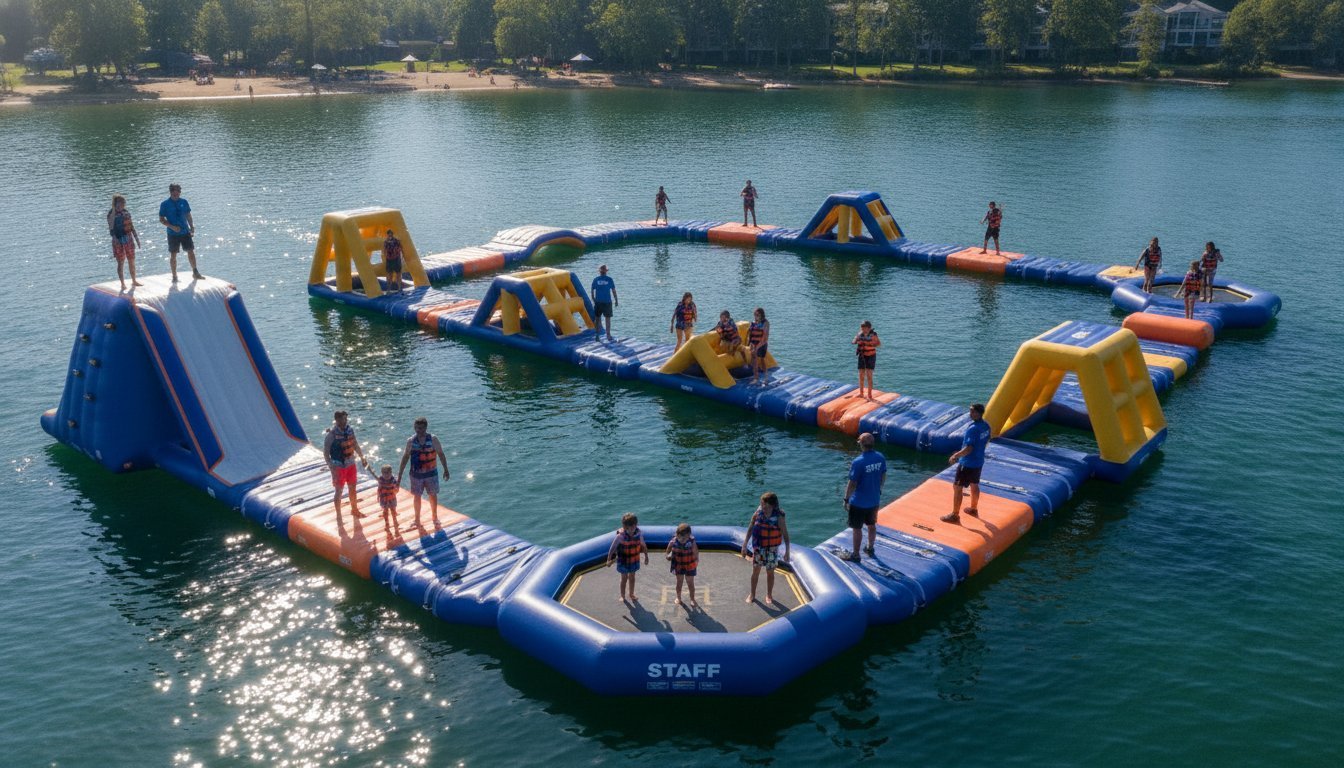
Did you know that 35% of all inflatable rental lawsuits stem from a single operational oversight: improper anchoring? It’s a sobering reality for any entrepreneur. You likely jumped into this industry for the high-energy growth and the infectious joy of recreation, but now you’re staring down the barrel of rising insurance premiums and the complexity of ASTM F2374-22 standards. It’s natural to feel the weight of responsibility when you’re balancing guest excitement with strict liability requirements.
We’re here to turn that uncertainty into an ironclad commercial strategy. This guide reveals exactly how to operate inflatable water park installations with the precision of a seasoned pro, ensuring your investment doesn’t just float, it dominates the market. You’ll gain the tactical confidence to manage staff effectively, mitigate weather risks, and protect your bottom line through every season. We believe in directness and transparency, giving you the tools to lead with authority.
We’ll walk you through a comprehensive daily operational checklist, professional staff training protocols, and the specific strategies needed to maximize guest throughput for peak revenue. Let’s realize the full potential of your aqua park together and transform your vision into a high-impact reality.
Key Takeaways
- Shift your perspective from managing a simple lake attraction to running a high-performance commercial revenue engine where operational discipline drives long-term ROI.
- Master the daily 6:00 AM launch sequence to identify overnight pressure shifts and anchoring changes before your first guest arrives.
- Learn exactly how to operate inflatable water park equipment by deploying specialized roles like gatekeepers and on-site technicians alongside your certified lifeguards.
- Optimize guest throughput using modular track strategies and standalone pieces to eliminate bottlenecks and keep traffic moving smoothly.
- Leverage professional on-site technician training to ensure your B2B commercial resort quality inflatables maintain their longevity and safety standards.
The Operational Vision: Turning Inflatables into a High-Performance Business
Stop viewing your park as a collection of floating toys. It’s a high-performance commercial engine. If you want to master how to operate inflatable water park facilities at a professional level, you must prioritize operational discipline above all else. This isn’t just about the “fun factor.” It’s about maximizing guest throughput while maintaining a safety-first culture that protects your assets and your reputation. Your long-term ROI is tied directly to how you manage the daily grind, not just the initial excitement of the launch.
Success in this industry requires a visionary mindset. You’re creating an immersive experience that guests will remember for years, but that experience is built on a foundation of pragmatic business logic. When you treat your park as a serious commercial venture, you’ll realize that every decision, from staff training to pressure monitoring, impacts your bottom line. It’s a balance of infectious joy and cold, hard results. You aren’t just selling a ticket; you’re managing a complex system of physics and psychology, which is why it’s beneficial to discover more about ticket sales and event packages at world-class venues like Columbia Pictures Aquaverse to see how they structure their guest offerings.
Commercial vs Residential: Why Quality Dictates Operation
The history and construction of commercial inflatables reveals a massive gap between backyard fun and B2B resort-quality systems. Material thickness is the silent hero of your daily operations. Commercial-grade PVC is engineered to withstand intense UV exposure and the relentless friction of hundreds of guests. Residential-grade products simply can’t handle the pressure, literally or figuratively. Understanding the distinction in Commercial vs Residential Inflatable Water Park: Why Material and Training Define Your ROI is vital. Superior materials mean more uptime, less maintenance, and a park that stays vibrant for seasons, not just weeks.
Setting Your Revenue Goals and Capacity Limits
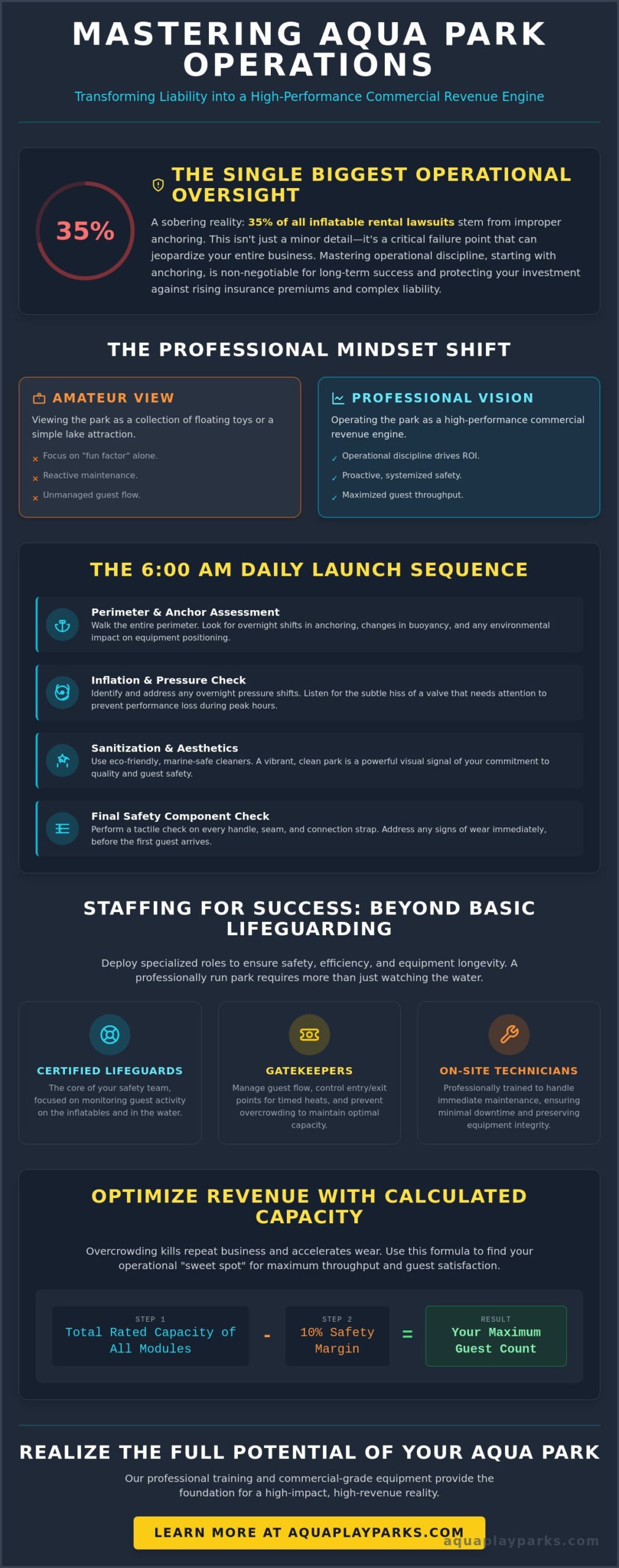
Revenue is a direct function of your park’s capacity. You need to calculate your maximum guest count based on the specific modular pieces in your layout. Don’t guess these numbers. Each piece has a rated capacity designed to ensure safety and flow. Over-operating might seem like an easy way to boost ticket sales, but it’s a trap. Crowded parks lead to accelerated wear, higher liability risks, and a poor guest experience that kills repeat business. Before you can set accurate capacity targets, it’s worth reviewing the ultimate checklist to buy commercial water park equipment so you understand exactly what rated capacities and durability standards to demand from your supplier. To find your “sweet spot,” consider these factors:
- Modular Count: Sum up the rated capacity of every obstacle and slide in your configuration.
- Safety Margin: Deduct 10 percent from your total capacity to allow for movement and “dead zones.”
- Timed Heats: Align your ticket sales with these capacity limits to ensure a premium, high-energy experience for every guest.
When you organize your park around these limits, you protect your investment and guarantee a higher throughput over the long haul. It’s about running a tight ship that delivers maximum impact without compromising the integrity of the equipment.
The Daily Launch Sequence: Setup, Inflation, and Safety Inspections
Your park at dawn is a silent powerhouse waiting for the spark of guest energy. Professionalism starts at 6:00 AM. Walking the perimeter isn’t just a morning ritual; it’s a critical assessment of how the environment affected your equipment overnight. You’re looking for shifts in anchoring, changes in buoyancy, and the subtle hiss of a valve that needs attention. Mastering how to operate inflatable water park setups requires this level of granular focus before the first ticket is ever scanned. It’s about proactive maintenance that keeps your revenue engine humming without interruption.
Sanitization and aesthetics play a massive role in guest perception. Use eco-friendly, marine-safe cleaners to maintain that vibrant, high-impact colour that draws crowds from across the lake. A clean park isn’t just about hygiene; it’s a visual signal of your commitment to quality. During this walkthrough, perform a final safety check on every handle, seam, and connection strap. If a strap feels loose or a handle shows wear, fix it now. Your reputation depends on the integrity of these physical touchpoints.
Mastering Pressure Management
Pressure isn’t a static metric. Across the United States, morning temperatures can fluctuate significantly, causing air to contract and leaving your obstacles soft. As the afternoon sun hits the PVC, that same air expands rapidly. You must monitor PSI levels throughout the day to prevent over-pressurization or dangerous under-inflation. Use high-volume pumps for the morning boost and precision pressure gauges for hourly checks. If you notice a wrinkle in the material or a dip in the surface when a guest steps up, your pressure is too low. If you’re ready to scale your operation with expert guidance, explore our floating aqua park designs built for commercial resilience.
Anchoring and Connection Integrity
The underwater bungee systems and anchor points are the invisible backbone of your park. Inspect them daily to ensure nothing has snagged or shifted. Modular gaps are a primary safety concern; they must be tight and flush to prevent entrapment hazards. Before your first season begins, conducting a thorough site assessment for floating water park installations ensures you’ve verified water depth, lakebed composition, and anchoring integrity from the ground up. We recommend a rigorous tug test for the following:
- Interactive running tracks: Ensure there is no significant play between modules.
- Monster Slides: Verify that the base anchors are secure against the weight of descending guests.
- Connection Straps: Look for any fraying or tension loss in the heavy-duty webbing.
This level of tactical oversight is exactly what we cover in our on-site technician training, ensuring your team has the expertise to maintain a safe, high-revenue environment. Never compromise on the stability of your layout; a secure park is a profitable park.
Staffing for Success: Beyond Basic Lifeguarding
Don’t make the mistake of thinking a few summer students with whistles can run a professional aqua park. High-revenue operations require a specialized crew. While standard lifeguarding is the baseline, mastering how to operate inflatable water park facilities demands a team that understands the unique physics of a floating environment. You need a hierarchy of roles that balances guest safety with operational efficiency. This isn’t just a summer job; it’s a high-stakes performance where every second of vigilance counts toward your bottom line.
Your staffing ecosystem should consist of three distinct pillars: Lifeguards, Gatekeepers, and On-Site Technicians. Gatekeepers manage the flow and ensure every guest has a signed waiver and a properly fitted life jacket. Lifeguards provide the eyes on the water, but they must be trained specifically for inflatables. A pool-certified lifeguard might not realize how the “give” of a PVC obstacle affects a guest’s balance or how to manage a “money earning monster slide” landing zone. Proactive safety means spotting a potential collision before it happens, not just reacting to a whistle blow.
Documentation is your best defence against liability. Every incident, no matter how minor, must be logged. Daily training sessions should be mandatory and recorded. When your staff knows that every inspection and orientation is tracked, they perform with a higher level of accountability. This culture of excellence protects your guests and your insurance premiums.
The Role of the On-Site Technician
Every park needs a dedicated hardware specialist. Your on-site technician is the engine room of your operation. They don’t watch the guests; they watch the gear. From performing minor seam repairs to adjusting anchor tension as the tide shifts, their work ensures the park stays open and safe. Without this role, minor wear can quickly turn into an expensive shutdown. Just as a property manager might call an emergency plumber Austin to fix a sudden leak and prevent damage, your technician ensures that small issues don’t lead to a full park closure. For a deep dive into these specialized skills, see our On-Site Water Park Technician Training: The Definitive Guide for 2026. It’s the difference between a reactive patch-job and professional longevity.
Guest Orientation and Rules of the Water
Safety starts before the first toe touches the water. Implement a mandatory 3-minute safety briefing for every guest. This orientation must cover the “no-go” zones, especially around high-intensity pieces like pyramid bag jumps and large slides. Be direct. Be authoritative. Explain the risks of diving or swimming under the modules. Managing different age groups on the same track requires active traffic control; use your lifeguards to pulse the crowds and prevent bottlenecks. When guests understand the boundaries, they have more fun, and your park runs like a well-oiled machine.
Maximizing Guest Throughput on Modular Tracks
Throughput is the pulse of your profit. If your guests are standing in line on a floating bridge rather than sliding into the water, you’re losing money and momentum. Mastering how to operate inflatable water park layouts effectively means managing the flow of human energy across your modular pieces. You want a park that feels alive and high-energy, not a congested bottleneck. Strategic movement is the difference between a one-time visitor and a season pass holder who raves about the seamless experience.
Organize your day into timed heats to maintain a consistent rhythm. We recommend 50-minute sessions followed by a 10-minute turnaround. This allows you to clear the track, perform a rapid visual sweep, and reset the energy for the next group. To prevent “clumping” on the main track, use standalone pieces like icebergs or independent climbing walls to divert crowds. These “satellite” attractions act as relief valves, pulling adventurous guests away from the main obstacle course and spreading the load across your entire footprint. For those just entering the industry, starting with a Campers Starter Park layout simplifies these logistics, providing a proven, high-flow foundation that’s easy to manage from day one. If you’re still evaluating which modules to invest in, our guide to finding a commercial inflatable water park for sale walks you through the exact durability markers and layout configurations that maximize throughput from the start.
Optimizing the Running Track Flow
Every professional layout needs a balance of speed zones and rest zones. Speed zones are the straightaways where guests can sprint and compete; rest zones are wider, stable platforms where they can catch their breath without blocking the path. Identifying potential “clog points”—usually at the base of a tall climbing wall or a narrow corner—is essential. You must train your staff to keep guests moving through these areas. A well-engineered track uses physics to guide the guest naturally. Explore the principles behind these layouts in our guide to Custom Inflatable Water Park Design: Engineering High-ROI Waterfront Destinations.
The Monster Slide Protocol
The Monster Slide is a premium revenue-earning asset that serves as the high-intensity anchor for your entire commercial operation. Because of the sheer scale and speed of these units, they require dedicated staffing at both the entry and the exit. The “top” guard controls the launch timing, while the “bottom” guard ensures the splash-down zone is entirely clear before the next rider descends. Never allow a guest to start their slide until the previous person has moved to a safe distance. This protocol isn’t just about safety; it’s about maintaining the “wow” factor of the ride without the chaos of a crowded landing area. If you’re ready to engineer a high-flow destination, our team can help you build custom floating aqua park designs that prioritize both safety and speed.
The Aqua Play Parks Advantage: Professional Training and Support
Operational excellence isn’t something you have to figure out through trial and error. You’re building a business designed for high-impact growth, and that requires a partner who has seen every tide change in the industry. At Aqua Play Parks, you gain direct access to a Canadian designer with 35 years of specialized experience in the field. This isn’t a distant corporate relationship; it’s a strategic alliance. We provide the blueprint for your waterfront domination, ensuring every modular piece is positioned for maximum revenue and peak safety. As your team grows more comfortable with the daily rhythm, we help you scale, adding high-velocity obstacles that keep your attraction fresh and your guests returning season after season.
The transition from an ambitious vision to a functioning revenue engine happens during the training phase. Knowing how to operate inflatable water park installations at a professional level is a skill set we transfer directly to your crew. We don’t just ship boxes; we build experts. By investing in our comprehensive support system, you eliminate the complexity of the startup phase and move straight into profitable execution. We believe in directness and transparency, giving you a clear path to realize your commercial goals without the intermediaries.
On-Site Technician Training Programs
Our professional on-site training sessions are the gold standard for the industry. We dive deep into the technical realities of your park, covering everything from precision pressure management to underwater anchoring adjustments. This specialized training is a powerful tool for lowering your insurance and liability risks. When your team can demonstrate documented, expert-level training, your business becomes a much more attractive prospect for commercial insurers. We empower your staff to handle any operational challenge with confidence, ensuring they can spot a minor maintenance need before it becomes a costly interruption. A trained team is a proactive team, and a proactive team protects your ROI.
The Campers Starter Park: Your First Step
For resort and campground owners, the Campers Starter Park represents the ideal entry point into the world of commercial aqua parks. It’s a curated selection of modular pieces designed for high throughput and easy management, allowing you to master the basics of the business while generating immediate cash flow. This package removes the guesswork, providing a scalable foundation that can grow as your operational expertise expands. If you’re ready to see how this fits into your business model, check out The Ultimate Water Park Starter Package for Campgrounds: A 2026 Buying Guide. It’s time to stop dreaming about potential and start leading the waterfront. Ready to lead the waterfront? Contact Aqua Play Parks for a custom quote and let’s build your monster revenue engine today.
Dominating the Market with Operational Excellence
You’ve seen the blueprint. Turning a floating attraction into a commercial powerhouse requires more than just a lake; it demands a relentless commitment to tactical safety and throughput. Mastering how to operate inflatable water park facilities means owning the 6:00 AM walkthrough and empowering a specialized team that goes beyond basic lifeguarding. By prioritizing pressure management and modular flow, you protect your ROI and your reputation simultaneously. This is about taking command of your waterfront and realizing its full commercial potential.
We bring 35 years of Canadian design experience to your shoreline. From the world’s largest money-earning monster slides to our hands-on on-site technician training, we provide the tools to eliminate complexity and drive growth. You aren’t just buying equipment; you’re securing a high-value partnership with a team that values efficiency and high-impact outcomes. The vision is clear. The opportunity is massive. It’s time to stop managing a lake and start leading an industry.
Scale your revenue with a custom-designed Aqua Play Park today. Let’s build something extraordinary together.
Frequently Asked Questions
How many staff members do I need to operate a floating water park?
Staffing requirements depend on your park’s total capacity and layout, but a standard commercial operation usually requires a minimum of three to five specialized roles. This includes at least one gatekeeper to manage waivers and life jacket fittings, one on-site technician for hardware adjustments, and multiple lifeguards at high-energy zones. For larger layouts with monster slides, you’ll need additional guards to manage launch and splash-down safety effectively.
Can I leave the inflatable water park in the water overnight?
Yes, our B2B commercial resort-quality systems are built for permanent seasonal installation. These heavy-duty units are designed to stay in the water throughout the summer to maximize your operational efficiency. However, you must perform a thorough 6:00 AM walkthrough every morning to identify any shifts in anchoring or buoyancy caused by overnight wind or currents. This proactive check ensures the park is ready for guests the moment your gates open.
How do I maintain the correct air pressure in my inflatables?
Maintaining the correct pressure is a dynamic task that requires constant attention. Across the United States, morning air in many regions can be cool, causing the material to contract and appear soft. As the afternoon sun intensifies, that same air expands rapidly. Learning how to operate inflatable water park equipment at a professional level means monitoring PSI levels at least three times daily to prevent over-pressurization. Use precision gauges to ensure every module remains rock-solid without risking seam stress.
What is the lifespan of a commercial-grade inflatable water park?
A professional-grade park typically delivers three to five high-performance seasons when managed with strict operational discipline. Longevity is a direct result of material thickness and UV resistance. By utilizing our on-site technician training, you can extend the life of your investment through expert seam care and proper seasonal storage. Starting with resort-quality PVC ensures your park remains a vibrant, revenue-generating asset rather than a maintenance liability.
Do I need specialized insurance to operate an aqua park?
You absolutely need general liability insurance with a focus on amusement devices. In the US market, policies typically range from $1,500 to $4,000 annually for standard limits. Most municipalities and private resorts require a certificate of insurance before you can begin your setup. Having a documented safety plan and trained on-site technicians can help you negotiate better rates with underwriters who specialize in high-impact recreation.
How do I clean and sanitize the modular obstacle pieces?
Use eco-friendly, marine-safe cleaners and soft-bristled brushes to maintain the vibrant colour and hygiene of your modules. Regular sanitization prevents algae buildup and keeps the surfaces slip-resistant for your guests. We recommend a deep clean at the end of every week to maintain that premium “new park” appeal that draws crowds. Keeping your park pristine is a visual signal of your commitment to excellence and professional standards.
What happens if a piece gets a puncture during operating hours?
Evacuate the affected modular piece immediately and redirect your guest traffic to other sections of the park. Your on-site technician can typically perform a rapid, commercial-grade repair using a specialized patch kit without shutting down the entire operation. Once the repair has cured and the piece is re-inflated to the correct PSI, you can re-open that section. This is why having a trained hardware specialist on your daily staff is vital for protecting your revenue flow.
Are there specific weight limits for guests on the monster slides?
Yes, every modular piece has a specific rated weight capacity and guest limit designed to ensure safe operation. These limits are especially critical for high-velocity attractions like our monster slides to ensure safe descents and splash-downs. Your staff must be trained to monitor guest size and age groups to prevent overcrowding on any single module. Adhering to these manufacturer specifications is a non-negotiable part of maintaining a safe, high-revenue environment.
Leave a Reply