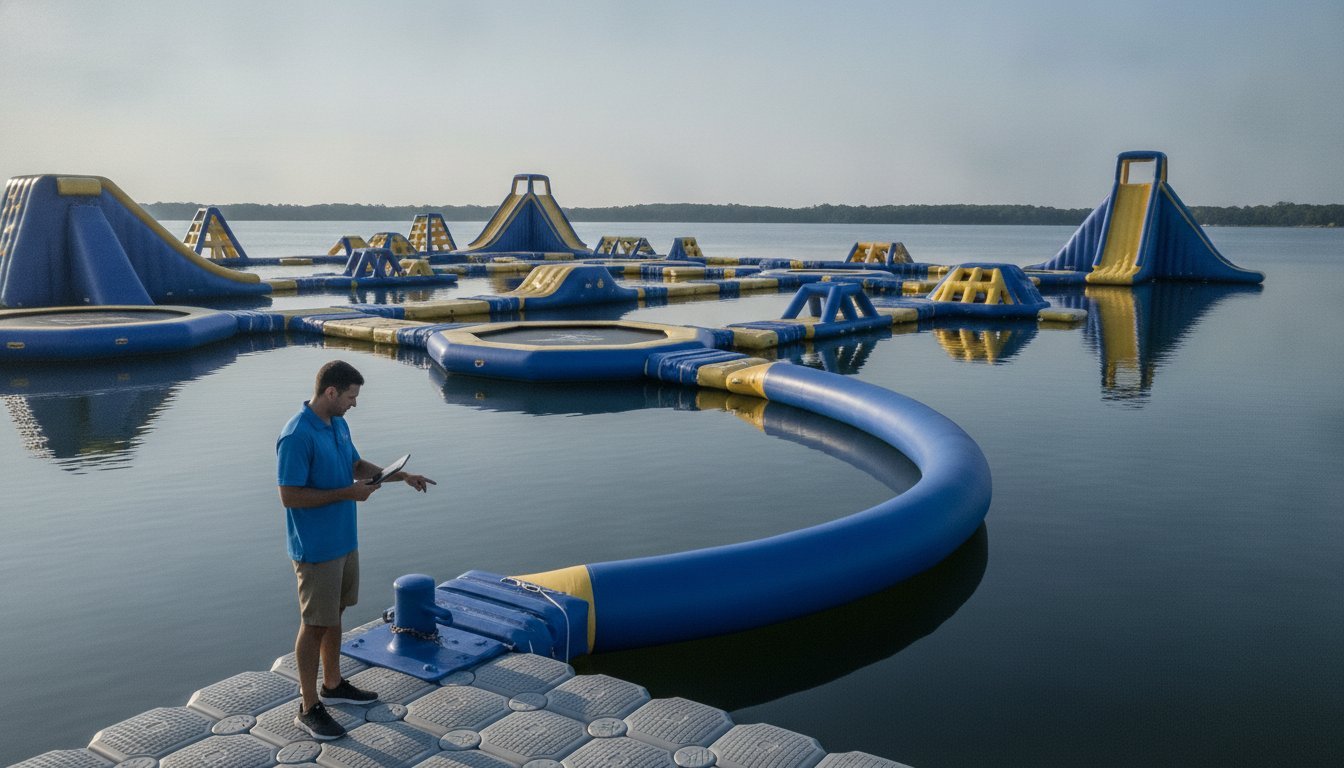
Safety isn’t a cost centre; it’s the most powerful insurance policy for your park’s revenue-earning potential. You’ve built a world-class destination to spark joy and drive growth. High energy. High stakes. Yet, the shadow of a catastrophic injury or a complex lawsuit can keep even the most seasoned operator awake at night. It’s frustrating to feel that safety protocols might slow down your guest throughput. When you realize the stakes, you see that safety is the engine of your success. That’s why implementing a rigorous commercial water park operator safety checklist is the only way to protect your legacy in 2026.
You already know that guest trust is your most valuable currency. We will hand you a turnkey safety framework that reduces insurance premiums and boosts satisfaction through visible leadership. This guide covers everything from the latest ASTM F2374-22 requirements to the critical role of on-site technician training. You’ll learn how to organize your operations to eliminate the “beach toy” mentality and replace it with B2B commercial-grade excellence. Let’s transform your safety standards into a clear, direct path for sustainable profit and peace of mind.
Key Takeaways
- Learn why commercial-grade PVC and precision-engineered anchoring systems are the non-negotiable foundation for guest safety and long-term ROI.
- Master the daily 30-minute pre-opening ritual and dynamic capacity management strategies integrated into our commercial water park operator safety checklist.
- Discover how to implement bulletproof liability waivers and colour-coded signage that guests actually read to significantly reduce legal exposure.
- Adopt the “Patch and Protect” maintenance philosophy to identify and resolve minor wear before it impacts your daily operations or guest experience.
- Understand the transformative power of on-site technician training to turn your staff into specialized experts rather than just standard lifeguards.
Structural Foundation: Anchoring and Material Integrity
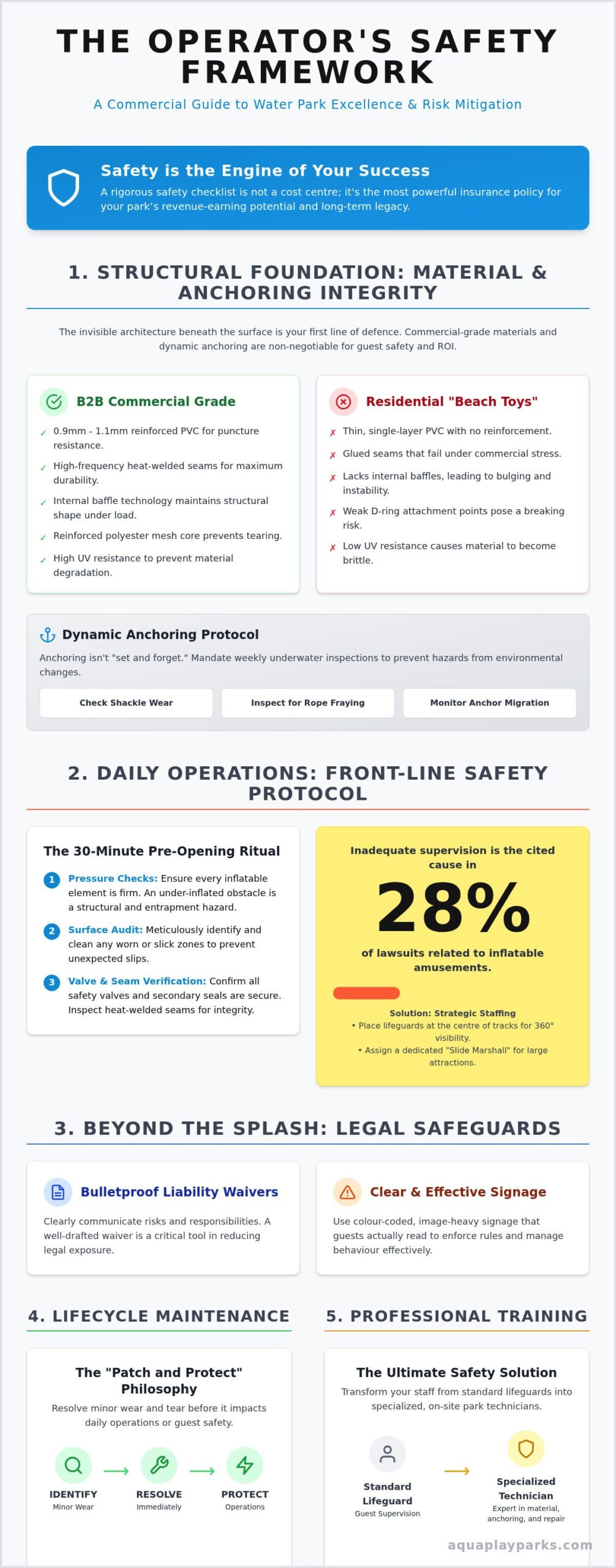
Your park’s foundation is hidden beneath the surface. It’s the invisible architecture that keeps your investment from drifting into a legal or operational nightmare. High-traffic resort environments demand more than just buoyancy; they require structural defiance against wind, waves, and the kinetic energy of hundreds of guests. When you build with commercial-grade PVC, you aren’t just buying an inflatable. You’re investing in a rigid, reliable asset that maintains its geometry under pressure. This structural integrity is the first item on any professional water park safety standards review, and it’s the cornerstone of your commercial water park operator safety checklist.
Don’t fall for the trap of “beach toys.” These low-cost alternatives lack the internal reinforcement needed for B2B operations. Look for these red flags during your procurement process:
- Single-layer PVC without polyester mesh reinforcement.
- Glued seams rather than high-frequency heat-welded bonds.
- Lack of reinforced D-ring attachment points.
- Thin, residential-grade material that feels like a pool floatie rather than a vessel.
The Anchoring System Deep-Dive
Anchoring isn’t a “set and forget” task. It’s a dynamic calculation of weight and tension. You must choose between heavy concrete blocks, screw anchors for sandy lake beds, or specialized bungee systems that absorb shock during storms. Seasonal lake level fluctuations can turn a perfectly tensioned track into a sagging hazard or a snapping risk overnight. Your commercial water park operator safety checklist must mandate weekly underwater inspections. Divers should check for shackle wear, rope fraying, and anchor migration. If your modular tracks aren’t flush, you’ve created a gap. Gaps lead to entrapment. Keep it tight. Keep it safe.
Commercial vs. Residential Material Standards
The sun is your greatest enemy. UV resistance is the only thing standing between a vibrant park and a brittle, seam-bursting disaster. Commercial-grade units utilize internal baffle technology, a complex system of interior ribbons that hold the shape of our massive Monster Slides even when fully loaded. Without these baffles, the unit bulges and loses structural stability. In 2026, the industry standard for high-traffic commercial zones requires a minimum material thickness of 0.9mm to 1.1mm reinforced PVC to ensure structural survival. This thickness provides the puncture resistance and tensile strength necessary to protect your ROI and your guests simultaneously. If it’s thinner than that, it’s a toy, not a business asset.
Daily Operations: The Front-Line Safety Protocol
Opening the gates isn’t just about scanning tickets. It’s about executing a high-stakes performance where safety is the lead actor. Your daily operations dictate whether you’ll see a record-breaking profit or a reputation-damaging incident. Precision is your best friend. A standard commercial water park operator safety checklist isn’t a suggestion; it’s the backbone of your morning. You need a 30-minute pre-opening walk-through that leaves no stone unturned.
Imagine the sun hitting your massive Monster Slides. Before the first guest splashes down, your team must be in motion. They aren’t just looking; they’re auditing. Pressure checks are paramount. An under-inflated obstacle isn’t just sluggish; it’s a structural hazard that can trap limbs. Firmness is your primary safety metric. If the PVC doesn’t offer immediate resistance, it’s not ready for the public.
The Pre-Opening Inspection Checklist
Your team’s ritual starts with a meticulous surface audit. They must identify any worn zones where friction has decreased, potentially causing unexpected slips. Every safety valve requires verification. Secondary seals must be checked for integrity. This isn’t just about checking boxes; it’s about verifying that every heat-welded seam is ready for the day’s load. Success in this industry is built on these small, disciplined moments of transparency. You should organize your team to realize that every valve is a barrier against liability.
Staffing for High-Capacity Attractions
High-energy environments require high-energy supervision. You can’t just throw bodies at the problem. You need strategic positioning. Placing lifeguards at the centre of modular tracks ensures 360-degree visibility. For your largest installations, like record-earning Monster Slides, a dedicated “Slide Marshall” is essential to manage dispatch intervals and weight limits. Research shows that inadequate supervision is the cause of 28% of lawsuits related to inflatable amusement devices. This role prevents the collisions that lead to these legal headaches. While standard certifications are a start, many elite operators pursue an Aquatic Facility Operator (AFO) certification to deepen their technical expertise. Your staff must also be trained to recognize the signs of “silent drowning,” which often looks like simple splashing to the untrained eye. If you want to ensure your park operates at peak efficiency while maintaining these standards, consider how custom floating aqua park designs can optimize your staff’s lines of sight.
Don’t ignore the sky. Your protocol must include strict wind speed thresholds for immediate evacuation. Communication is the glue that holds this together. In high-noise resort environments, radios and standardized hand signals are faster than whistles. Ensure your team has a clear loop of information. When everyone is on the same page, your park becomes a fortress of fun. This proactive approach is exactly what a robust commercial water park operator safety checklist delivers every single day.
Beyond the Splash: Waivers, Signage, and Legal Safeguards
Stop viewing legal safeguards as a hurdle. They are your shield. A bulletproof commercial water park operator safety checklist must bridge the gap between physical safety and legal protection. You’ve invested in world-class equipment. Now, you must secure your ROI by ensuring every guest interaction is governed by rigorous standards. This isn’t just about avoiding a lawsuit. It’s about projecting the authority of a professional resort destination that values its guests’ well-being as much as their excitement.
What Your Safety Waiver Template Must Include
Your waiver is your first line of defence. It needs to be explicit. It must detail the specific assumption of risk inherent in aquatic environments, from the kinetic energy of a Monster Slide to the unpredictable nature of open water. For resort operators, parental consent protocols for minors and school groups are non-negotiable. The legal necessity of clear and conspicuous language cannot be overstated; it ensures that guests are fully aware of the specific hazards they are assuming before they step onto the modules. Understanding the nuances of water park liability is essential for any operator looking to minimize exposure in an increasingly litigious environment. Don’t settle for a generic template that treats your park like a backyard pool.
Visual Safety: Signage That Works
Visual safety is where your protocols become public. Don’t hide the rules in a binder. Use colour-coded signage that guests actually read. Pictograms are essential for international resorts where language barriers can lead to dangerous misunderstandings. A well-placed sign at the water’s edge is worth more than a dozen warnings in the parking lot. You must also realize that signage is part of the guest experience. Make life jacket requirements feel like part of the fun rather than a chore. When guests see that safety is a visible, organized part of the experience, their confidence in your leadership grows.
Don’t fall for the “one size fits all” trap with age and height restrictions. Every piece of custom-designed equipment has specific operational limits. Digital waiver management is the only way to ensure 100% compliance in 2026. It allows you to organize your data, track guest flow, and provide instant proof of consent if a claim arises. This level of visible safety leadership differentiates a professional operation from a temporary setup. It shows your guests that you are a straight-shooter who takes their safety seriously, which in turn drives high guest satisfaction and repeat visits.
Lifecycle Maintenance: Preserving Your Investment
A high-performance aqua park is a revenue-generating machine. Like any machine, it requires a disciplined maintenance schedule to ensure peak performance and guest safety. You shouldn’t wait for a failure to take action. Proactive maintenance is the pulse of a successful operation. By integrating these steps into your commercial water park operator safety checklist, you protect your capital investment and ensure your park remains a premium destination year after year. It’s about more than just looking good; it’s about structural survival in harsh environments.
Hygiene and Water Quality Management
Biological growth is a silent threat. Mid-season deep cleaning is essential to prevent algae and biofilm buildup on underwater components. These substances create hidden tripping hazards and can compromise the integrity of your PVC over time. You must use approved cleaning agents that effectively remove contaminants without damaging the material or harming the delicate lake ecosystem. Surface contaminants like bird droppings aren’t just unsightly; they carry bacteria that can impact guest health. Regular scrubbing keeps your park vibrant and safe. When your guests see a sparkling, well-maintained park, they realize they are in the hands of a professional leader who values their experience.
Structural Wear and Tear Audits
Don’t ignore the warning signs of material fatigue. Your team must be trained to identify “stress whitening” in the PVC. This discolouration often precedes a blowout and indicates that the material has been pushed beyond its limits. Inspect every handle and ladder attachment daily. These are high-stress points that bear the full weight of active guests. Understanding the difference in Commercial vs Residential Inflatable Water Park material is crucial here; commercial-grade PVC is designed to withstand these forces, but even the best materials require vigilance. Adopting a “Patch and Protect” philosophy allows you to address minor wear before it becomes a catastrophic tear.
Your off-season strategy is just as important as your summer hustle. Winterizing your park prevents material degradation caused by freezing temperatures and improper storage. Clean, dry, and fold your modules carefully to avoid permanent creases or mould growth. Finally, keep meticulous records. A comprehensive safety log is your best friend during insurance audits or regulatory inspections. It provides a transparent history of your commitment to excellence. If you’re ready to upgrade to a park built for longevity, explore our B2B commercial resort quality designs today. This level of organization ensures that your park remains a high-impact, low-complexity asset for decades.
Professional Technician Training: The Ultimate Safety Solution
A manual is a starting point, not a destination. You can’t run a world-class resort from a PDF or a dusty binder. Real safety requires muscle memory. It requires your team to understand the equipment as deeply as the engineers who designed it. While a standard commercial water park operator safety checklist provides the “what,” our specialized training provides the “how.” We transform your staff from passive observers into proactive Waterfront Technicians. They become the guardians of your ROI and the protectors of your guests’ joy.
Professional instruction is the most direct way to slash your liability insurance premiums. Carriers look for evidence of expert-led operational standards. They want to see that your team has practised emergency response drills for the “what if” scenarios that keep owners awake. When you invest in professional training, you aren’t just checking a box. You’re building a fortress around your reputation. It’s a pragmatic, results-oriented business move that yields dividends in both safety and guest satisfaction.
The Aqua Play Parks Training Advantage
We don’t just ship boxes. We provide on-site expertise. Our training advantage is built on hands-on instruction for the setup and tear-down of modular pieces. Your team will master advanced troubleshooting for anchoring and pressure management. They’ll learn to read the water and the weather. We empower your staff to make the “Safety Call” during adverse conditions without hesitation. This confidence ensures that your park operates like a well-oiled machine, even during peak capacity on the world’s largest Monster Slides.
Building a Culture of Safety Excellence
Safety is a guest-facing brand value. When visitors see a team that is organized, confident, and professional, their trust in your resort skyrockets. This isn’t a one-time event. Continuous education keeps the team sharp throughout the season. It prevents the mid-summer complacency that leads to incidents. By prioritizing training, you eliminate the “beach toy” mentality and replace it with a culture of excellence. Ensure your park is a high-ROI, low-risk destination. Learn more about our On-Site Technician Training and secure your park’s future today.
Transform Your Waterfront into a High-Performance Profit Centre
Your journey from a standard operator to a visionary resort leader starts with a commitment to uncompromising standards. We’ve explored how structural integrity, daily discipline, and legal precision create a fortress around your brand. Implementing a rigorous commercial water park operator safety checklist isn’t just a regulatory hurdle. It’s the most effective way to eliminate the fear of liability and replace it with the confidence of visible leadership. By prioritizing commercial-grade materials and meticulous anchoring, you ensure your park remains a safe, high-capacity destination for years to come.
Don’t leave your success to chance or a basic manual. With 35 years of direct designer experience, we specialize in custom high-ROI waterfront solutions that drive growth while minimizing risk. Our on-site technician training is included to ensure your team is ready for any scenario. It’s time to see beyond the immediate product and realize the larger transformative potential of a professionally managed park. Protect Your Investment with Professional Training and build a legacy of joy and profitability. Let’s make 2026 your most successful season yet.
Frequently Asked Questions
Do I need a specific safety waiver for an inflatable water park?
Yes, you need a specialized waiver that addresses the unique hazards of open-water inflatables. Generic liability forms often fail to detail specific aquatic risks like drowning or kinetic collisions. A robust commercial water park operator safety checklist should mandate a waiver that includes explicit assumption of risk clauses. This ensures your resort is protected from claims of negligence while clearly communicating safety expectations to every guest before they step onto the modules.
How many lifeguards are required for a commercial floating water park?
Staffing levels depend on your park’s custom design and guest capacity. Generally, you should aim for a ratio that allows 360-degree visibility of all modular tracks. Many jurisdictions require at least one certified lifeguard for every 25 to 50 guests. For high-traffic areas like our Monster Slides, adding a specialized Slide Marshall is a smart business move to manage dispatch intervals and prevent the collisions that lead to expensive legal headaches.
What wind speed is considered dangerous for inflatable water slides?
Wind speeds exceeding 30 kilometres per hour are generally considered the threshold for immediate park evacuation. Inflatables act like massive sails in high winds, which can lead to anchor migration or structural instability. Your daily protocol must include real-time weather monitoring. If gusts reach dangerous levels, you must prioritize guest safety over throughput. This direct approach protects your equipment and ensures your reputation as a safety-conscious leader remains intact throughout the season.
Are life jackets mandatory for all guests on a floating aqua park?
Life jackets are absolutely mandatory for every guest regardless of their swimming ability. This is a non-negotiable standard for any B2B commercial resort quality installation. Providing high-visibility, well-fitted personal flotation devices reduces the risk of silent drowning and simplifies the supervision task for your lifeguards. It’s a simple, high-impact rule that should be prominently displayed on your signage to ensure 100% compliance from the moment guests arrive at the water’s edge.
How often should I inspect the anchoring system of my water park?
You should conduct surface-level anchoring inspections every morning during your 30-minute pre-opening walk-through. However, a comprehensive underwater audit by a diver is required at least once a week. They must check for shackle wear, rope fraying, and anchor migration caused by wave action or seasonal lake level fluctuations. Consistent record-keeping of these checks is a vital component of your commercial water park operator safety checklist to satisfy insurance auditors and ensure structural survival.
What is the difference between residential and commercial-grade inflatable safety?
Commercial-grade equipment uses reinforced PVC that is significantly thicker and more UV-resistant than residential beach toys. While residential inflatables are designed for light use, B2B modules feature internal baffle technology to maintain their shape under the weight of hundreds of guests. This structural defiance prevents the sagging and entrapment hazards common in cheaper alternatives. Investing in resort-quality materials is the only way to ensure long-term ROI and protect your guests from catastrophic failure.
Can I operate a water park on a private lake without a permit?
Operating on a private lake doesn’t exempt you from safety standards or liability. While municipal permits vary, you’re still held to ASTM F2374-22 standards in a court of law if an incident occurs. You should always consult with local authorities and your insurance provider to ensure you’re fully compliant with regional bylaws. Operating without the proper framework is a massive risk that can lead to negligence per se rulings, regardless of the lake’s ownership status.
What happens if a guest refuses to sign the safety waiver?
If a guest refuses to sign the safety waiver, they cannot be allowed to enter the park. There are no exceptions to this rule. Your waiver is a critical legal shield that protects your business from the financial impact of bodily injury claims. Allowing an unsigned guest onto the equipment is a breach of your operational protocol and can void your insurance coverage. Be a straight-shooter; explain that the policy exists to ensure a safe environment for everyone.
Leave a Reply